Pick a page
They follow the order of the unit, but each page stands on its own. Every page has a Learn tab, a Practice tab with levels, a Print tab with worksheets and keys, and a Teacher tab with the standard and pacing notes.
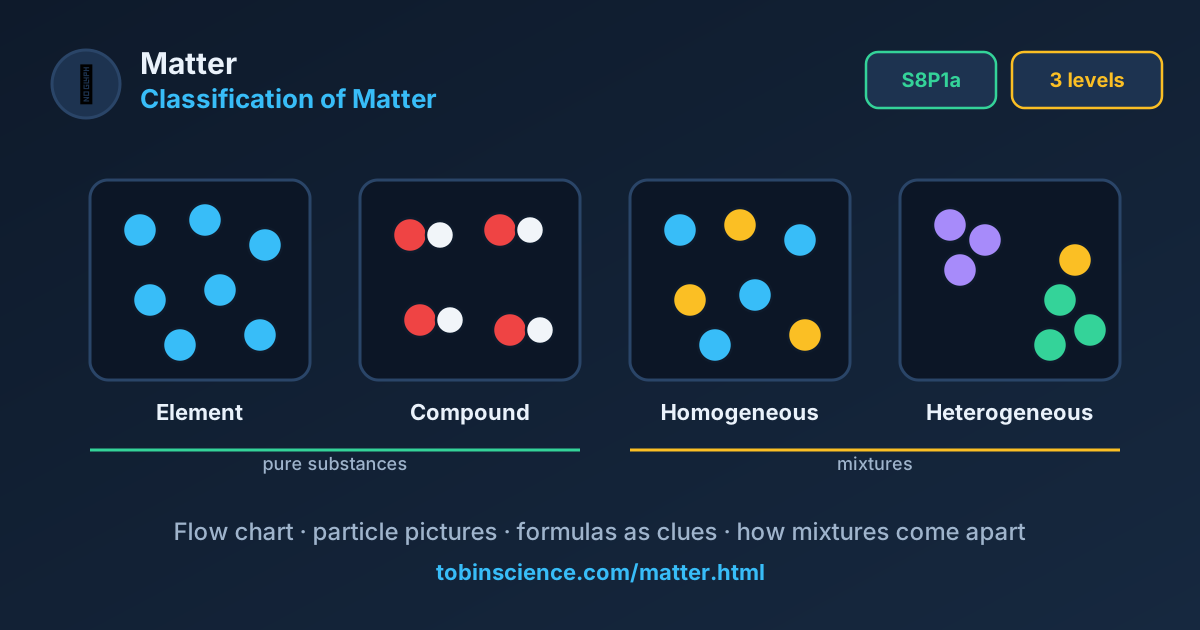
Classification of Matter
Pure substance or mixture, then element or compound, homogeneous or heterogeneous, with particle pictures for every one.
- A clickable flow chart students walk with real items: air, gold, cereal in milk, salt water
- Particle-model drawings students read and build: one kind of atom, bonded atoms, mixed particles
- Formulas as clues: why O2 is still an element and why NaCl is nothing like sodium or chlorine
- How mixtures come apart: filtering, evaporating, magnets, and why a compound cannot
- Three practice levels, a sixty-second sort, and printable worksheets with keys
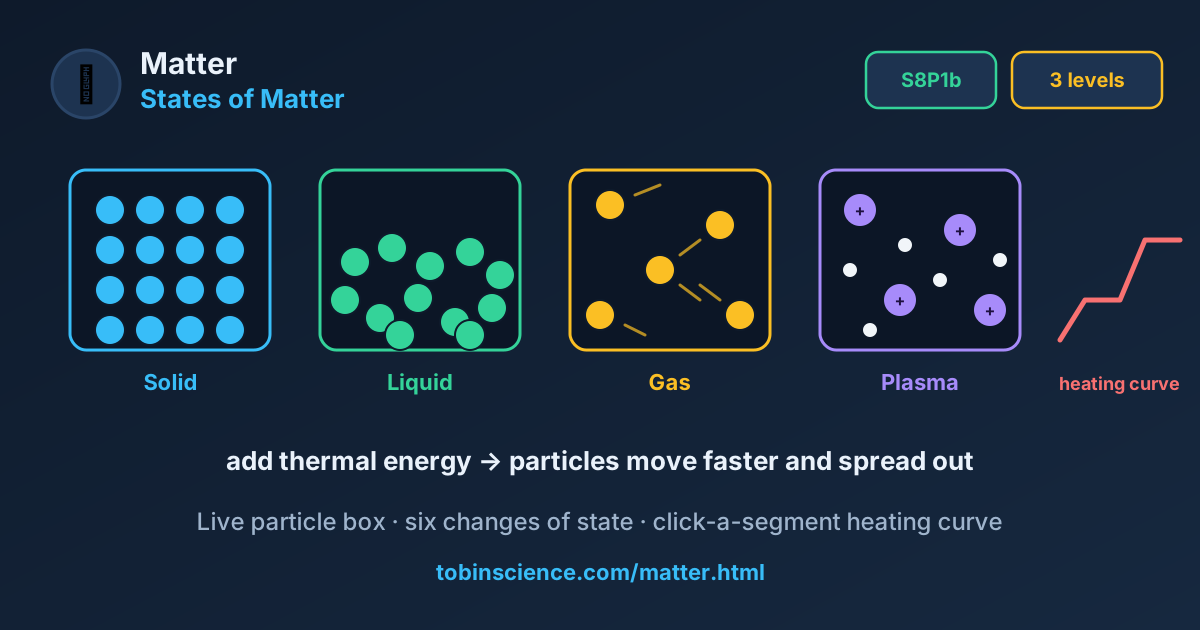
States of Matter
Particle motion in solids, liquids, gases, and plasma, the six changes of state, and how to read a heating curve.
- A live particle box: add or remove thermal energy and watch the particles vibrate, slide, fly, and ionize
- Kinetic molecular theory at the 8th grade level: three ideas, no equations
- Melting, freezing, boiling, evaporation, condensation, sublimation, deposition, with everyday examples
- An interactive heating curve: click any segment and see what the particles are doing and why the line is flat
- Three practice levels, a phase-change speed round, and printable worksheets with keys
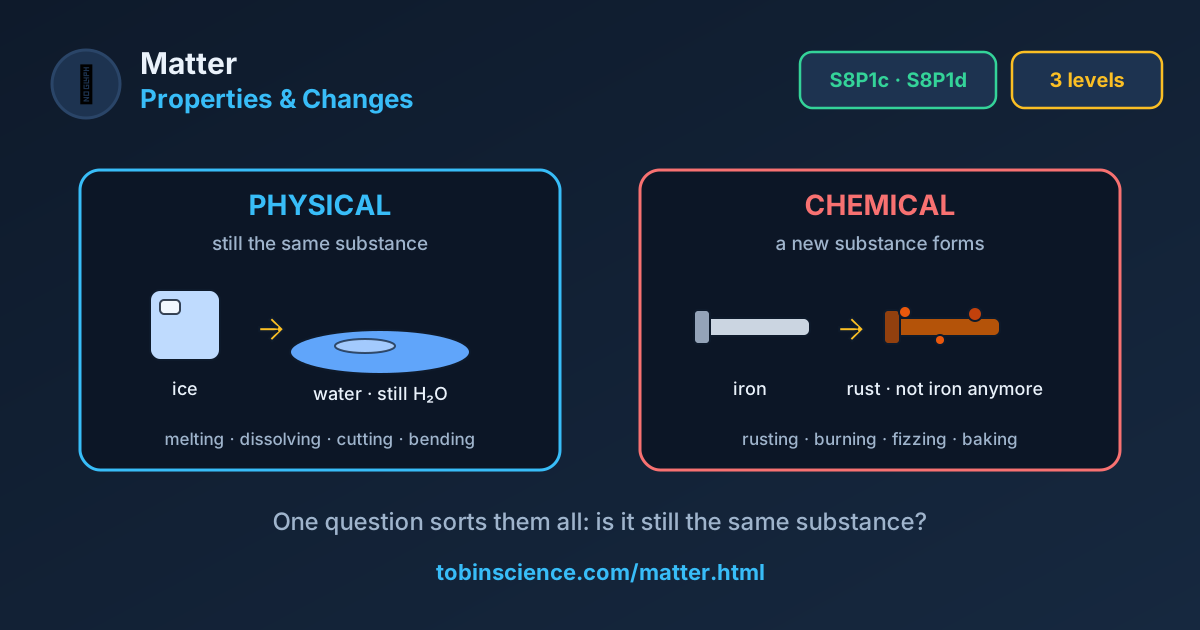
Properties & Changes in Matter
Physical vs chemical properties, then physical vs chemical changes, with the evidence that tells them apart.
- The one question that sorts every property and every change: is it still the same substance?
- Density as a substance's ID card, with the cut-it-in-half misconception handled head on
- The five signs of a chemical change, and when a bubble or a temperature change is NOT one
- A sorting game, an evidence judge, and a claim-evidence-reasoning builder for the test question
- Three practice levels, a speed sort, and printable worksheets with keys
Related
Other free tools that pair with the matter unit.
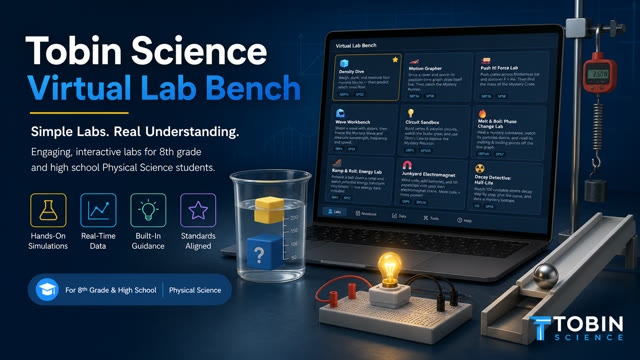
Virtual Lab Bench
Density Dive and the Melt & Boil phase-change lab run the experiments these pages describe.
Open the Lab Bench →
Simple Science Videos
One-minute explanations of S8P1a through S8P1d, ready for a lesson opener or a review.
Browse the videos →
Chemistry Activities
The periodic table, counting atoms, naming compounds, and balancing equations for the rest of the unit.
Open Chemistry Activities →